

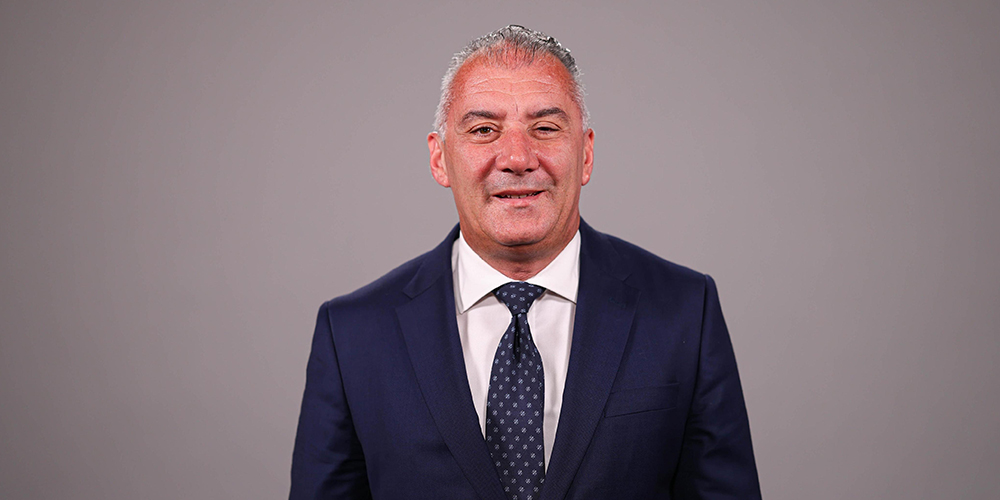
22 Oct Interview Jo Etienne Abela, Minister of Tourism, Malta
Could you tell us a little about your background, your current goals and the main challenges you face?
I am a surgeon by profession, born and raised in Gozo, although I spent most of my adult life on mainland Malta. I also lived in Scotland for about ten years, where I trained and practiced as a surgeon. I entered politics in 2022 and was elected to parliament, taking on the portfolio for elderly care. In 2024, health was added to my responsibilities. Following my re-election in 2026, I was appointed Minister of Tourism, with a mandate to drive long-term change in line with the government’s vision for Malta’s future.
The Maltese government has undertaken an important exercise to develop Vision 2050 for our islands. Tourism features prominently in this vision, contributing around 12% of Malta’s GDP directly and an estimated 25% when indirect contributions are included. Roughly one in four jobs in Malta is linked to tourism, meaning that almost everyone contributes to the sector, directly or indirectly. Tourist arrivals have steadily increased and we project that Malta will welcome 4.5 million visitors this year. This milestone, originally anticipated under Vision 2050, has been reached several years ahead of schedule. With these numbers, we must become more selective about the tourism we attract. This does not mean rejecting any particular type of visitor; we value every arrival. However, it is our responsibility as a country to be more discerning, just as travelers themselves are becoming increasingly selective.
Tourists want authentic experiences and the opportunity to share in the everyday lives of Maltese and Gozitans within their communities. We believe this is central to the future of tourism. Visitors should be able to experience our way of life without compromising our traditions or identity, while tourism encourages improvements in residents’ quality of life. The value tourists bring to Malta should benefit not only the economy, but also the people who live here. These two objectives must go hand in hand. Tourism requires a whole-of-government approach, involving not only my ministry but also those responsible for security, culture, local councils, energy, the environment and sustainable development. Everyone has a role to play in improving the sector. If tourism development conflicts with residents’ needs and expectations, there is a problem. Our responsibility is to avoid that conflict and this is precisely why we need a long-term vision for tourism. An authentic experience means living as local residents do and we place great importance on that.
What kinds of unique Maltese heritage and types of tourism do you particularly want to promote?
Take Maltese cuisine, for example. We have simple, traditional dishes, such as ftira, a sandwich made with our own freshly baked bread and fillings such as tuna. Maltese ftira is recognized by UNESCO as intangible cultural heritage and we want visitors to experience these local traditions for themselves. Although the Maltese Islands are small, they have a great deal to offer. In recent years, Malta has gained considerable recognition in the Michelin Guide, with around 50 restaurants featured at that level. We have thousands of restaurants across the islands and the vast majority offer excellent food, with some outstanding establishments among them. Gastronomy is one of the tourism segments we want to promote and develop. The government believes that continued investment in Malta’s restaurant industry will help attract more discerning visitors, which is precisely the kind of tourism we want to encourage. We do not want restaurant businesses to operate at odds with the needs and way of life of local communities. Maintaining this balance is essential and it is something we will continue to nurture.
Another important segment is faith tourism, for which Malta is well known. Christmas and Easter bring a range of activities unique to our islands. While some traditions may resemble those in neighboring Sicily or other parts of Italy and Spain, Malta and Gozo have their own distinctive ways of celebrating. Despite the islands’ small size, subtle differences exist even between neighboring villages. This is particularly evident in processions during Lent, Good Friday and Easter, as well as in Christmas celebrations. Malta and Gozo are also famous for their village festas. Throughout the summer, villages and towns celebrate their patron saints, with some holding more than one festa. These week-long celebrations reach their peak from Friday to Sunday and feature spectacular aerial and ground fireworks. During the summer months, several villages may hold their festas simultaneously, creating a lively atmosphere across the islands. One of the most important dates on the religious calendar is the Feast of Santa Marija or the Assumption of Our Lady, celebrated on 15 August. At least eight towns and villages across Malta and Gozo mark this occasion. Faith tourism has deep roots in our islands, dating back thousands of years.
Malta and Gozo are home to remarkable archaeological sites, including the Ħal Saflieni Hypogeum, the Mnajdra and Ħaġar Qim temples in Malta and the Ġgantija temples in Gozo. These Neolithic sites form an important part of our history and heritage and are among the earliest landmarks on our religious and cultural heritage trail. Over the centuries, Malta has been shaped by successive civilizations and empires. Carthaginian and Punic remains are among the evidence of our ancient past. A few years ago, for example, the construction of a new staff car park at Mater Dei Hospital led to the discovery of a Punic cemetery dating back around 2,500 years. Our Neolithic heritage goes back even further, some 6,000 to 7,000 years. Remains from the Roman period also testify to the religious practices of that era. The Arab period was equally significant, leaving a lasting mark on our language and culture. Maltese and English are our two official languages and Maltese has its roots in Arabic. Later, European powers, including the Normans, Aragonese and Angevins, left their mark on the islands. The arrival of the Knights of St John was particularly significant. They ruled Malta for several centuries and established Valletta, our capital, renowned for its imposing fortifications and historic architecture, which have stood the test of time. Valletta is rich in grand buildings and palaces, including the Sacra Infermeria, now home to the Mediterranean Conference Centre (MCC).
Our religious and cultural heritage is extensive and already attracts considerable interest. The Ministry for Tourism works with the Ministry for Culture to help local communities restore and maintain these sites. Many communities would struggle to shoulder the costs alone, making central government support essential. European Union funding is also invaluable in helping local communities preserve these important landmarks. This support protects a heritage that we, as residents, cherish and that visitors can discover, appreciate and experience for themselves.
How do you balance these new forms of tourism with the traditional summer two-week holiday with sun, sea and sand?
For many years, Malta has been a sun-and-sea destination and that remains an important part of its appeal today. Nowhere in Malta is very far from the coast, making the sea one of our greatest assets. In recent years, the government has increasingly developed maritime transport to help residents and visitors travel between different parts of the islands. Fast ferry services connect Valletta, Sliema and Buġibba, as well as Gozo, while smaller ferries link Valletta to the Three Cities in southern Malta, which were already inhabited during the time of the Knights of St John. The sea remains a major attraction throughout much of the year, supported by Malta’s mild climate. We are increasingly making the most of our maritime connections, offering residents and visitors a convenient and enjoyable way to explore the islands.
The sea also offers opportunities for luxury tourism, with boating, yachting and other water sports available almost all year round. January and February can be blustery, but for much of the year, the climate is ideal for leisure activities and travel by sea. The Rolex Middle Sea Race is another highlight of Malta’s maritime calendar, attracting participants from Malta and around the world. Eight or nine boats are locally crewed or based, including one representing our sister island of Gozo. It is an important event on the Mediterranean yachting calendar. Our sea connections with Sicily and mainland Italy also make it easier for visitors to explore beyond Malta. A fast ferry links Malta with Pozzallo in Sicily in approximately 90 minutes.
Malta’s Institute of Tourism Studies (ITS) offers programs ranging from part-time and certificate courses to diplomas and bachelor’s degrees. We aim to expand its academic offerings further to include master’s degrees and doctoral programs. The institute currently has around 700 students, including 300 new students who joined at the start of the latest academic year. It develops skills across the tourism industry, from culinary arts to hospitality, providing both initial training and opportunities for professional development and reskilling. This is essential for Malta and its workforce. We also cooperate with other countries and have satellite campuses in China. Students from China come to Malta to complete their studies or progress to bachelor’s degrees. Our partnerships with Zhengzhou and Nanjing are particularly important. Asian cuisine is popular in Malta and I see it, along with other international culinary traditions, as complementary to our own rather than competing with it. These influences enrich our way of life and broaden our culinary experiences.
More broadly, international cooperation and trust are vital to tourism. We live in a period of considerable geopolitical uncertainty, yet the tourism industry continues to grow. This demonstrates the importance of trust between countries, as visitors must feel confident about the destinations they choose. Our prime minister recently highlighted this issue in his address to the United Nations in New York, noting that there is too much mistrust in today’s geopolitical climate. Tourism offers a positive example of how countries and people can build relationships based on mutual confidence. If we used tourism as a benchmark for how countries interact, we might see far fewer problems in the world. Tourism is about offering holidays, luxury and even dreams. That is what makes it such a rewarding and meaningful area of government.
Could you tell us more about Malta’s wellness, health and medical tourism sectors?
Private healthcare providers in Malta are making progress in this area, although I believe medical tourism is still in its early stages on our islands. Malta has a strong reputation for quality healthcare and the Ministry for Tourism supports the sector’s development. We recognize the growing interest in preventive and regenerative medicine, as well as personalized healthcare.
Several private healthcare facilities are investing in these emerging fields and I reiterate the ministry’s support for their initiatives. These are relatively new areas of healthcare, attracting interest across Europe and Malta wants to be at the forefront of this development, building on its established reputation for quality care. For now, these initiatives are led by private providers and fall outside the National Health Service. Tourism encourages countries to work together, build trust and develop partnerships. Healthcare is another field in which international cooperation is essential. Bringing the two together creates promising opportunities and through collaboration, we can achieve meaningful results.
The WTTC Global Summit recently took place in Malta. What message did Malta want the world to take away from the summit in Valletta? Beyond showcasing Malta as a tourism destination, what concrete investment partnerships and business opportunities would you like to see emerge?
The World Travel & Tourism Council (WTTC) event is a first for Malta, bringing together ministers, policymakers and leading industry stakeholders from around the world. The opportunities it offers are enormous, although it is still too early to determine the specific outcomes, given the wide range of participants and sectors represented, from cruise holidays to medical tourism. The WTTC could also help attract international luxury brands that are not yet present in Malta. Such foreign investment is important if we are to achieve our goal of developing quality tourism. Despite its small size, Malta has always made its mark by looking towards the future.
This event is about more than ideas: it is an opportunity to turn discussions into tangible investments. Crucially, local communities must benefit from these initiatives. Investing in a sector against the wishes of residents would be counterproductive. Tourism development must never come at the expense of the people who live here. One of the key responsibilities of the Ministry for Tourism is to ensure that investment aimed at improving the visitor experience also serves the interests and well-being of Malta’s residents.
Rapid expansion in the short-term rental market has put pressure on residential neighborhoods and created hotel pricing competition, prompting recent Malta Tourism Authority (MTA) closure orders on non-compliant properties in areas like Swieqi. How is the Ministry planning to regulate short-term accommodation supply to ensure a level playing field for licensed hoteliers while preserving community character?
In mid-June this year, new regulations governing short-term rentals came into force. This was an important first step, but it is not the end of the process. The Ministry for Tourism is pursuing further initiatives to ensure that short-let operators act responsibly. The government is not opposed to short-term rentals; we support high-quality accommodation that respects local communities. Nor are we against visitors or tourism. We want to attract increasingly discerning tourists, but visitors who disrespect our communities cannot expect our welcome to remain unchanged.
We are working closely with the Ministry for Home Affairs to maintain the momentum in regulation and enforcement. This does not mean turning Malta into a police state, but we must challenge the perception that our islands are simply a place to enjoy the sun and party without limits. We want to offer visitors a wonderful experience without compromising our residents’ quality of life. Our aim is to ensure that all accommodation, from hotels and guesthouses to boutique properties and short-term rentals, meets high-quality standards while respecting the communities in which it operates.
How is the Ministry using AI in its operations and the tourism sector in Malta?
This is a very important development and the work is still ongoing. It involves collaboration between the MTA and the National Statistics Office, using AI to provide real-time data and insights into tourism. This powerful tool will help residents, investors and other stakeholders better understand what is happening in the sector. AI is increasingly shaping tourism, particularly in areas such as pricing and bookings.
Although I am relatively new to the industry, my position remains the same as when I was responsible for healthcare: AI is here to stay and it is important, but nothing replaces the human touch. This is why we place such emphasis on the ITS. We embrace new technologies and AI, but a genuinely pleasant tourism experience cannot exist without human interaction. Our people remain our greatest asset. Relying solely on technology while neglecting human resources would, in my view, be a recipe for disaster. Experiences are created by people, not robots. We should embrace AI and technological innovation without allowing them to replace the human element that makes Malta special.
What are the Ministry’s main goals and challenges regarding sustainability?
I am impressed by the local industry’s efforts to develop hotels and short-let accommodation more sustainably. Increasingly, businesses are looking for cleaner ways to meet their energy needs, particularly through solar power. Malta is blessed with abundant sunshine and we must make the most of it. Given our limited land, we cannot simply set aside large areas for energy production. Instead, we must be innovative, making use of every available space on our buildings to generate renewable energy. I am encouraged to see developers investing in energy efficiency through measures such as double glazing and energy-efficient design. This is the way forward and it is an approach we have already adopted in our healthcare facilities. Having moved from healthcare to tourism, I am pleased to see the private sector embracing these principles.
We cannot develop tourism at the expense of our remaining green spaces. This is important to me personally and as Minister for Tourism. Protecting Malta’s green areas is non-negotiable and we cannot support projects that compromise them. We already have developed areas where we can focus on refurbishment, renovation and innovative redevelopment. I have no objection to modernizing existing built-up areas to better serve the tourism industry, provided this is done responsibly. Our islands are beautiful because of their varied landscapes and coastal environments.
Although Malta does not have beaches stretching for hundreds of miles, its coastline offers remarkable diversity. Within short distances, visitors can encounter sandy shores, rocky coastlines and gentle hills. This variety of landscapes and natural habitats is what makes Malta special. We must preserve what remains of our natural environment and ensure that tourism development never comes at the cost of this precious heritage.
Malta’s filming industry has hosted blockbusters such as Gladiator and Troy. Discussions under Vision 2050 include developing permanent film-heritage attractions and a modern multipurpose convention center. How does the Ministry intend to translate temporary film production sets into long-term, revenue-generating tourist infrastructure? How are targeted financial incentives helping Malta compete with major European mainland cities for year-round MICE business?
The film industry falls under the Ministry for Culture, but the Ministry for Tourism increasingly recognizes the potential of film tourism. Visitors want to explore locations featured in well-known films and we are working with our colleagues in the Culture Ministry to develop this cinematic trail. This segment is being actively promoted in both Malta and Gozo. Malta is also well placed to develop its MICE (meetings, incentives, conferences and exhibitions) sector, thanks in part to its favorable climate. Our generally reliable weather makes the islands an attractive destination for business events, ranging from gatherings of a few hundred people to conferences involving several thousand. We have the necessary accommodation infrastructure to support this growth.
Over the past 15 years, the local industry has invested heavily in four and five-star hotels, while the refurbishment of three-star hotels and guesthouses continues. Investment in high-end accommodation has been particularly significant, with many luxury hotels concentrated in St Julian’s. Five-star boutique hotels have also emerged in town centers across the islands, especially in Valletta. This quality accommodation is essential to attracting major meetings, conferences and events. Malta also offers impressive venues for business gatherings.
One outstanding example is the MCC, formerly the Sacra Infermeria, a hospital built by the Knights of St. John to treat male patients. Around 300 years ago, it could accommodate up to 2,000 patients at a time. Today, its historic halls provide a remarkable setting for conferences and other events. The MCC, opposite Fort St Elmo, is an impressive venue in a beautiful part of Valletta. It hosts events throughout the year and is booked almost daily. Alongside the MCC, Malta offers a variety of attractive locations for meetings, exhibitions and other business events. We can accommodate MICE activities across Malta and, on a smaller scale, on our sister island of Gozo.
Strategic airline expansion has reduced UK market concentration from 60% down to 21%, opening strong new corridors across 21 Italian airports, 10 German hubs, Poland and long-haul markets like the United States. What are the Ministry’s next target markets for direct long-haul air routes, particularly across the DACH region?
For any island, connectivity is essential. When Malta was moving towards independence from the British Empire, it was a key priority. Establishing our national airline, Air Malta, helped ensure reliable connections and bring visitors to our islands. The United Kingdom has traditionally been our largest source market and continues to be an important one. Over the years, however, we have welcomed increasing numbers of visitors from across Europe, including Germany, Austria, France and Spain. In recent years, Poland has also become a significant source market. Connectivity has improved further with the arrival of low-cost airlines, several of which now have a strong presence in Malta. They have opened our islands to a wider European market, contributing to the record visitor numbers we are experiencing today, for which we are grateful.
This year, Malta has gained a direct connection to JFK Airport in New York, helping bring the number of visitors from North America to around half a million annually. We are actively working to sustain and expand this connectivity. We are also looking to develop markets in Asia. Malta is connected to Asia through major hubs such as Istanbul, Dubai and Doha, although tensions in the Middle East have created some uncertainty around certain routes. Istanbul remains an important transit hub for visitors travelling from Asia and Australia and these are markets we want to develop further. Alongside North America and Asia, we remain committed to our traditional European markets. As a European country on the continent’s southern periphery, Malta has long welcomed German-speaking visitors, particularly from Germany and Austria. These markets remain extremely important to us and the MTA has offices in Germany to strengthen our presence there. We also recognize the importance of our relationship with Austria, particularly through Flughafen Wien, a major shareholder in Malta International Airport.
As Malta advances its Vision 2050 goals, foreign direct investment and international corporate partnerships remain essential across green hotel conversions, technology and heritage restoration. What is your core message to international corporate leaders regarding the future of the island and its economic and financial landscape, yet maintenance of its charm?
German-speaking visitors have been an important part of Malta’s tourism industry for decades and we consider these markets essential to our long-term success. Throughout my life, I have encountered many German-speaking tourists. One reason for our longstanding connection is that German has been taught in Maltese schools alongside Italian and French for many years. This was a forward-thinking decision by our education system. We greatly value visitors from German-speaking countries and have continually adapted our services and tourism offerings to meet their expectations. We intend to continue doing so.
Most Maltese people speak Maltese and English, which is a significant advantage for our tourism industry, complementing our favorable climate. Connectivity between Malta and German-speaking countries is also very good, with regular flights operated by KM Malta Airlines, Lufthansa and various low-cost carriers. With the range of tourism experiences we are developing, German-speaking visitors have plenty to look forward to when they choose to visit and stay in Malta.